
Blog / Factions
BEVEL factions guide: Iron Pact, Allied Command and Proxy Axis
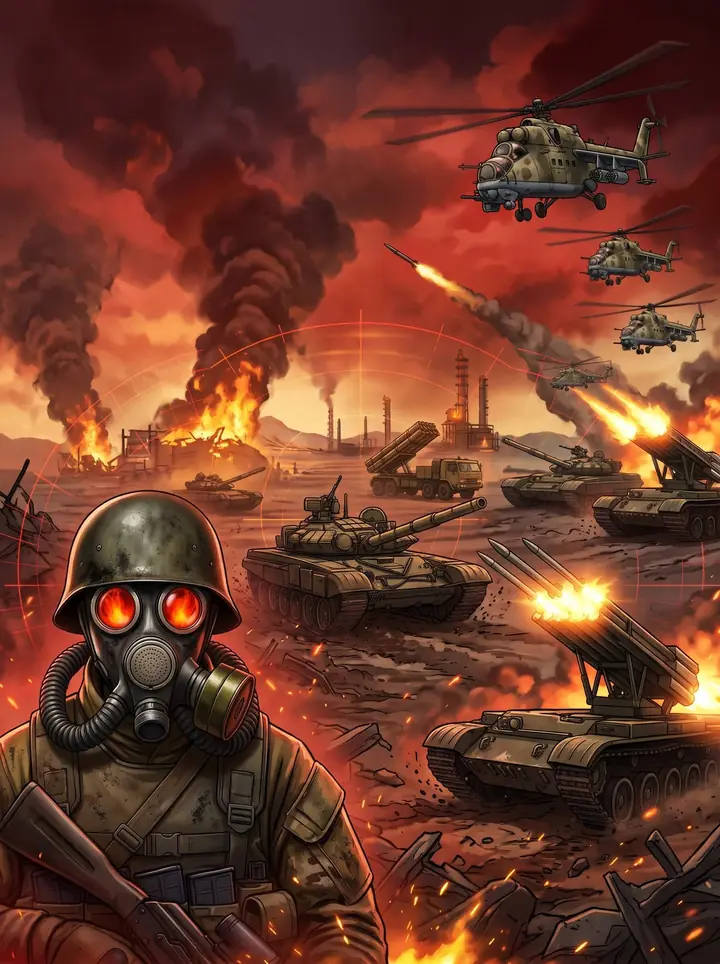
Every commander in BEVEL picks one of three armies before the shooting starts. They share a backbone: every side fields rifle squads, anti-armour teams, engineers, haulers, main battle tanks, anti-air vehicles, artillery, scouts, aircraft and a specialist. But each army gives those units its own name and its own strengths, and each adds exclusive units, its own money building and its own superweapon. The biggest difference is the least visible one: each faction builds its base in a different way.
Here is what you are signing up for.
Iron Pact
"Armor. Industry. Victory, according to the morning briefing." The Iron Pact is led by Grand Marshal Boris Voronin, who will explain at length why every one of his offensives is a defensive measure. Its army is built around heavy armour, artillery and steady industrial pressure.
How it builds
The Iron Pact commissions foundations directly. You pick a building and place it, and no builder needs to drive there. To build further away, a Mobile Construction Rig deploys a Forward Construction Post that extends your building range.
What it brings
- Colossus Heavy Tank: a slow, massive twin-gun tank that repairs itself when it is out of combat.
- Arc Troopers: armoured infantry with arc projectors. Short range, but devastating against infantry and vehicles alike.
- Kalina Hunter Submarine: invisible until it fires. Its heavy torpedoes break ships and anything on the waterfront.
- Hammer Howitzer: the Pact's artillery hits harder than anyone else's, at the price of a slower reload.
- Tracked Hauler: even the salvage trucks carry a machine gun.
Money comes from the Arms Export Depot, which sells spare weapons every twelve seconds while it has power. Peace, as the building notes, is bad for business. The superweapon is the Signal Override Array, which hijacks the digital controls of enemy vehicles for 90 seconds. People are never converted, only their tanks.
Play it if you like to build a heavy fist and push it forward slowly. Iron Pact command powers include Steel First, which gives all combat vehicles 15% more armour, and Iron Carpet, which lays eight anti-vehicle mines.
Allied Command
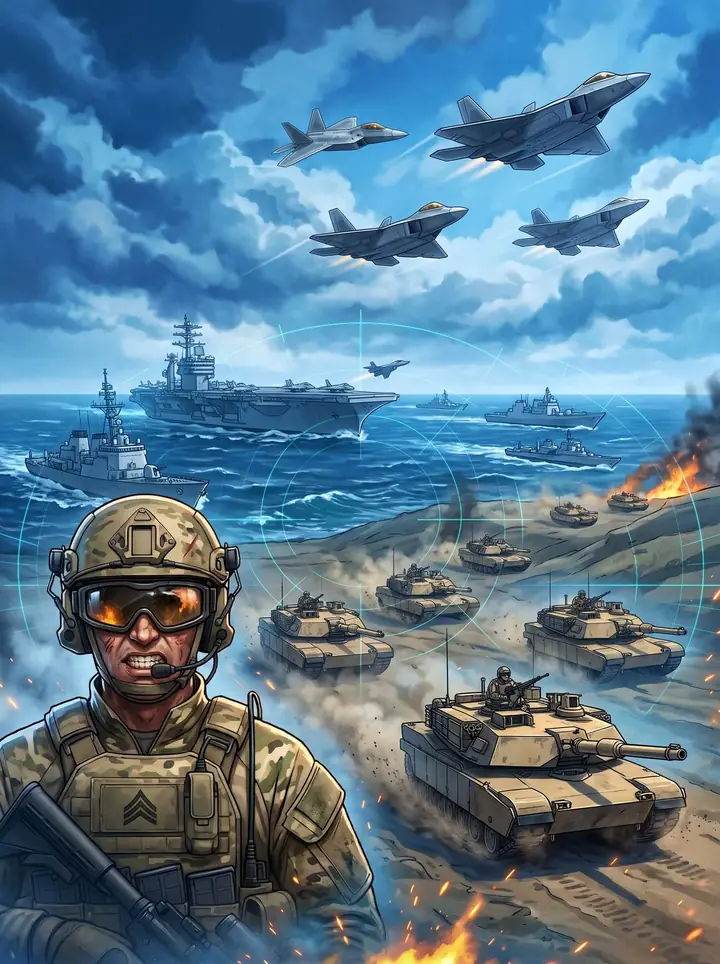
"Precision. Mobility. An astonishing number of approvals." Allied Command is led by General Lucas Vance, who answers to First Secretary Eleanor Voss and works with Captain Mara Vale as his field liaison. It fights with mobile forces, reconnaissance and carefully combined attacks.
How it builds
Allied bases are built by the Construction Dozer, a vehicle you train at the Field HQ. Send it anywhere you have scouted and it puts up the building on the spot. One vehicle works on one project, so more dozers mean a faster base. A dozer sent to one block of a wall takes on the whole wall.
What it brings
- Lumen Lance: a beam tank with long reach. Every hit jumps on to two more enemies nearby.
- Overwatch Marksman: a long-range precision rifle that picks off infantry before they can answer. Keep it away from tanks.
- Aegis Destroyer: long-range cruise missiles that level shore defences and ships, and very little to do against anything that gets close.
- Bastion MBT: the sturdiest standard battle tank of the three armies.
Money comes from the Trade Exchange, which trades supplies every sixteen seconds, delivery fees included. The superweapon is the AI Cyber Command: an AI-driven cyber attack that shuts down every hostile structure in a wide area for 90 seconds.
Play it if you like to see the enemy first and hit exactly where it hurts. Orbital Peek reveals a wide area for two minutes, Express Delivery makes all units train 15% faster, and Rapid Response drops four Garrison Squads wherever you can see clear ground.
Proxy Axis
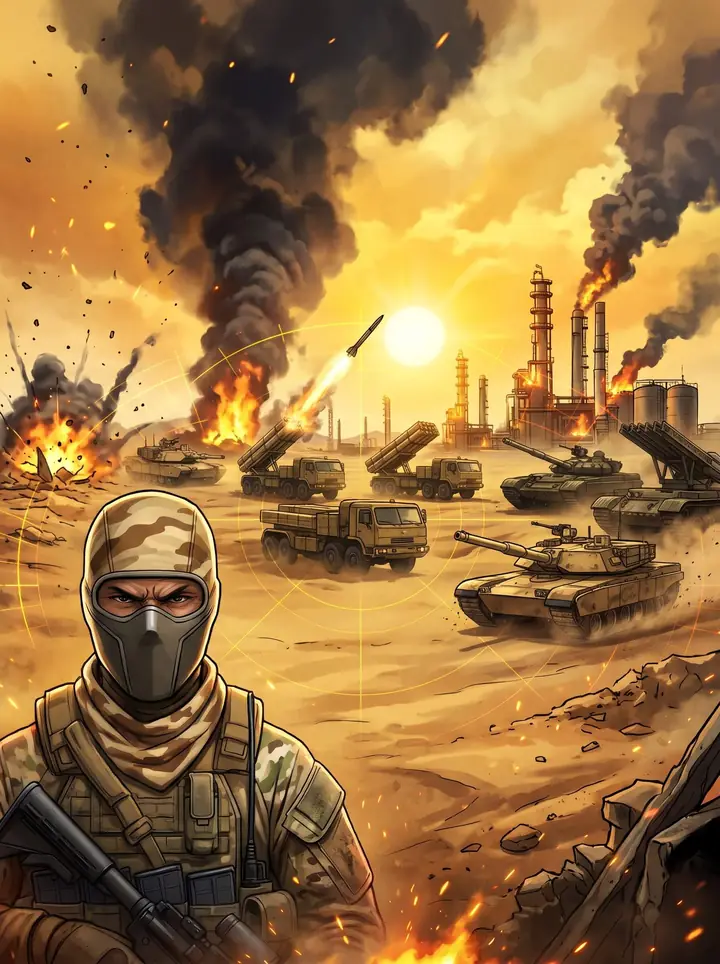
"Your conflict. Our recurring revenue." The Proxy Axis is run by Commander Farhad Rostami, with signals analyst Leyla "Patch" Karimi listening in on everybody. It wins with ambushes, drones and supply networks that are hard to pin down.
How it builds
The Proxy Axis has no construction vehicle. Its Labor Crews do everything: they gather salvage and they build the base. They are cheap and quick to train, but they carry far less salvage per trip than another army's truck. Expect a crowd of workers rather than a few big haulers.
What it brings
- Ghostline Operative: unseen unless enemies come close. It can walk into an enemy refinery and steal half their credits, or sabotage any other structure. A sabotaged power plant blacks out their whole grid.
- Shade Stealth Tank: a fast missile tank that stays hidden until it fires or enemies come close.
- Signal Hacker: kneels with a laptop and earns credits every six seconds while your Advanced Operations has power, earning more the longer nobody disturbs it.
- Demolition Hound and Hornet Swarm Boat: explosives with legs and explosives with an outboard motor. Send them in packs.
- Glasswing Drone: the scout is an unarmed flying drone, and the Needle Strike Drone is the fastest attack aircraft in the game.
The superweapon is the Voice of the Revolution, a broadcast that wins hostile infantry over for good, stalls vehicles and fires up your own troops.
Play it if you like to be somewhere the enemy is not looking. Nothing Wasted adds 15% to salvage and hacker income, and Unwelcome Mat lays eight hidden anti-vehicle mines.
Things every army shares
- The Strategic Battery. Every faction can build this missile battery on top of its own superweapon. All superweapons charge in public and warn everyone before they strike, so the other side always gets a few seconds to panic.
- Command points. Destroying enemy units and buildings earns experience, experience earns command points (up to five), and points buy the doctrines mentioned above. Each army has its own tree of four.
- Research. Most buildings research two levels of a global upgrade, such as faster infantry training, stronger walls or extra power.
- Capture. Engineers capture neutral buildings and enemy facilities. A captured facility keeps training its original army's exclusive units, which is the only way to field a Colossus as Allied Command.
Which one should you pick first?
If you are new to RTS games, start with the Iron Pact. Placing buildings without a builder is the most forgiving way to learn, and the campaign is played as the Pact too. Pick Allied Command once you like scouting and timing. Save the Proxy Axis for when you enjoy juggling many workers and setting traps. Our beginner's guide walks you through your first match with any of them.
You can try all three right now in Skirmish, with no account and nothing to install: open BEVEL and choose your command.
Keep reading
- Guide · 4 min readBEVEL beginner's guide: your first base, army and winNew to BEVEL or to RTS games? The basics of power and money, a simple build order, the controls, and how to beat your first bot in Skirmish.
- Comparison · 3 min readBEVEL vs Generals and Red Alert 2: an old-school RTS in a browser tabHow BEVEL compares to Command & Conquer: Generals and Red Alert 2: what it keeps from the classics, what it changes, and why it needs no installation.
- Guide · 4 min readCo-op Defense in BEVEL: how to hold the line for 20 wavesA guide to Co-op Defense, BEVEL's survival mode: the four maps, how the waves attack, what allied bots do and how up to eight players hold out.